



Clean slates and reinvention are powerful themes. I mean, who hasn’t dreamed of starting over or remaking themselves. Lose that midlife spare tire, dye your hair magenta, and run off to join the circus. Or whatever your fantasy is. (Uhm, I’m not saying that’s my fantasy.)
When we talk about the booming genres of midlife urban fantasy and paranormal women’s fiction, there’s a comfortable pattern readers expect. Often, these books feature a divorced, empty-nester who discovers a completely new, magical lease on life once the kids are gone or no longer have that husband who holds them back. (Not saying all husbands are like that.) It’s a classic, empowering trope of a midlife metamorphosis. It’s a chance for the protagonist to shed the heavy domestic responsibilities of her past and step entirely into a new, extraordinary identity.

Hold on. Put the brakes on. Unless your former life got literally wiped clean off the slate of life, you’re never going to shed those “heavy domestic responsibilities.” If you’ve got kids, you’ll always have kids who’ll ask to borrow $275 or need a shoulder to cry on. If you’re divorced, you’ve got an ex lurking in the background. If you’re a widow, then you’ve got grief.
But when I sat down to write the MAGICA series, I realized I wanted to explore a completely different kind of midlife journey. I didn’t want to write about a woman escaping her family ties to find her magic; I wanted to write about a woman whose magic is inextricably bound to her family, her trauma, and her deep, unshakeable responsibilities as a mother.
Family drama is the engine in my Magica Series. The magic can be wild, and the villains can be feral. But it’s the family mess that makes you keep reading at midnight when you promised yourself you’d go to bed.
For women over 40, family conflict in novels doesn’t read like “plot.” It reads like real life. You’ve been someone’s daughter for decades, and maybe someone’s partner. Maybe someone’s mom. You know what it costs to keep peace, and you also know what it costs when you stop. Maybe you’ve read it, maybe you haven’t—either way, Magica: Book 1 Rise of the Cult feels familiar. Sure, you don’t have an actual rogue witch or evil cult trying to ruin your life, but you might metaphorically. Despite the problems we have to face, everyone still needs dinner every night, and you still gotta pump because you thought having a baby at 44 was a good idea. I mean, you love her to pieces, but you realize you just don’t have the same energy as when you were 35.
My protagonist, Maggie Towne, is not your typical midlife heroine who stumbles into her powers late in the game. She’s known she was a witch with powers since childhood. Magic isn’t a startling midlife revelation for her; it is the fundamental reality of her existence. However, the scope of her true power was kept from her, not discovering she was the Magica, a title carrying immense weight and destiny, until she turned eighteen. Maggie did uncover the truth despite the cruel machinations of her own mother, who deliberately and maliciously hid the truth from her. Family secrets aren’t usually big reveals; they’re slow leaks. Nobody says a word, and then one spark takes out the kitchen.
Maggie’s mom was not a good mom, and that early betrayal fueled Maggie’s desperate desire to be the best mom possible. Growing up under the shadow of a woman who withheld truth, warmth, and support created a profound maternal wound in Maggie. But rather than letting that trauma harden her, it forged her primary driving force in life, the consuming desire to be the absolute best mother she can be to her own children. Maggie wants to be everything her mother wasn’t: nurturing, honest, protective, and fiercely present.
Yet, life as the Magica has not made that goal easy. It’s the problem all working mothers face. Career and domestic life butting heads, each seeking equal purchase. Balance is a myth. The most we can hope for is a teeter-totter life. And Maggie’s legacy as the Magica is full of danger, and she’s paid a high price for it. Being the chosen-one is risky, not just for herself but for her family as well. That cost came due with the murder of her husband and her youngest son. She’s a mother trying to keep a family functioning after grief that never politely exits the room. This unimaginable loss changes the entire landscape of the series. Maggie isn’t just fighting supernatural battles; she’s carrying a crushing load of grief, worry, and survivor’s guilt.
This month’s reader freebie is “The Towne Family Grimoire,” a fun insight into Maggie’s life. Click here to get yours.
Grief in a supernatural book isn’t just sadness; it’s a distortion field where people make decisions they wouldn’t usually make. They cling, they push away, and they get reckless. The horrific knowledge that she has already lost pieces of her heart colors every decision Maggie makes. In Magica, Maggie’s losses aren’t decorative backstory; they shape how she parents, how she trusts, and how she reacts when danger returns. I love that the story doesn’t pretend you get over something like that in a neat arc. When a character is carrying a heavy burden of guilt and worry, still unraveling two years later, that’s not melodrama; that’s a recognizable human timeline. Motherhood is the central, beating theme of these books, but it is a raw, battle-scarred version of motherhood that requires immense grit.
Because motherhood is such a massive theme in these books, Maggie’s children are fully fleshed-out characters. Maggie has six children. That’s not a cute detail; that’s a logistical nightmare even without magic. I don’t care how magical the setting is, children shouldn’t read like props. And I made sure of that. Maggie’s children have their own logic, loyalties, and secrets. They’re grappling with their own grief, their own magic, and their own complicated relationships with a mother who is simultaneously trying to parent them and save the world. Picture Buffy Summers with a large brood. In fact, most of the “chosen-one” protagonists are untethered. Maggie doesn’t get to pause being a mom just because there’s a magical crisis. She has to manage her very real, very human family drama at the exact same time she is actively hunting down a rogue witch and dismantling an evil cult.
Parenting under threat isn’t about generic “my child is in danger” scenes. It’s packing lunches while you suspect someone’s watching your house or keeping your voice calm while you’re doing threat assessment in your head. Then there’s the heavy guilt Maggie suffers when she depends on the older children to fill in for her and care for the younger ones, or when Maggie needs to send the children to their grandparents when the danger becomes insurmountable. Readers forgive a lot of magical weirdness, but they don’t forgive a mother acting like she has no history with her own kids.
When evil forces Maggie away from home, all her children must fulfill roles. It’s a family, not a plot. Everyone’s got issues. The troubled child, the reliable child, the resistant child, even in magical families, those roles stick. When danger escalates, every choice has a ripple. One child’s supportive while another resents Mom’s job. One child’s confident and cooking up cinnamon rolls for a house full of witches who’ve come to support the Magica, while another child is unsure and scared about her role in the magical world. It’s messy, and it should be. That’s where paranormal thrillers can feel weirdly validating for older women, because you’ve done hard things while smiling. You’ve had to be the adult even when you were falling apart.

The plot of the Magica books gets incredibly dense as Maggie balances these internal family dynamics while actively fighting external threats. The external conflicts—the cults, the magical battles, the rogue elements threatening her world—are constantly intersecting with the domestic conflicts of her household. Saving the world is not the only thing at stake, and I intentionally anchor the supernatural threat in a very domestic fear. Someone comes to the door on a stormy night, desperate. That someone is just barely out of childhood herself, which triggers Maggie’s maternal instincts, but those same instincts have to protect her own family as well. The villains aren’t random. A cult and a rogue witch are hunting down something they believe belongs to them. A cult is a twisted version of family with a messed-up agenda.
But family doesn’t just stop at blood. In this novel, it includes the wider community of witches. In this witch world, everyone’s considered to be either a sister or a mother. The wider community of witches becomes an extended family unit, offering support, shared history, and a collective strength that Maggie desperately needs. And she never takes this support for granted; she knows she’s lucky to have it, especially when most women don’t. Maybe there’s a larger message in there for our society.
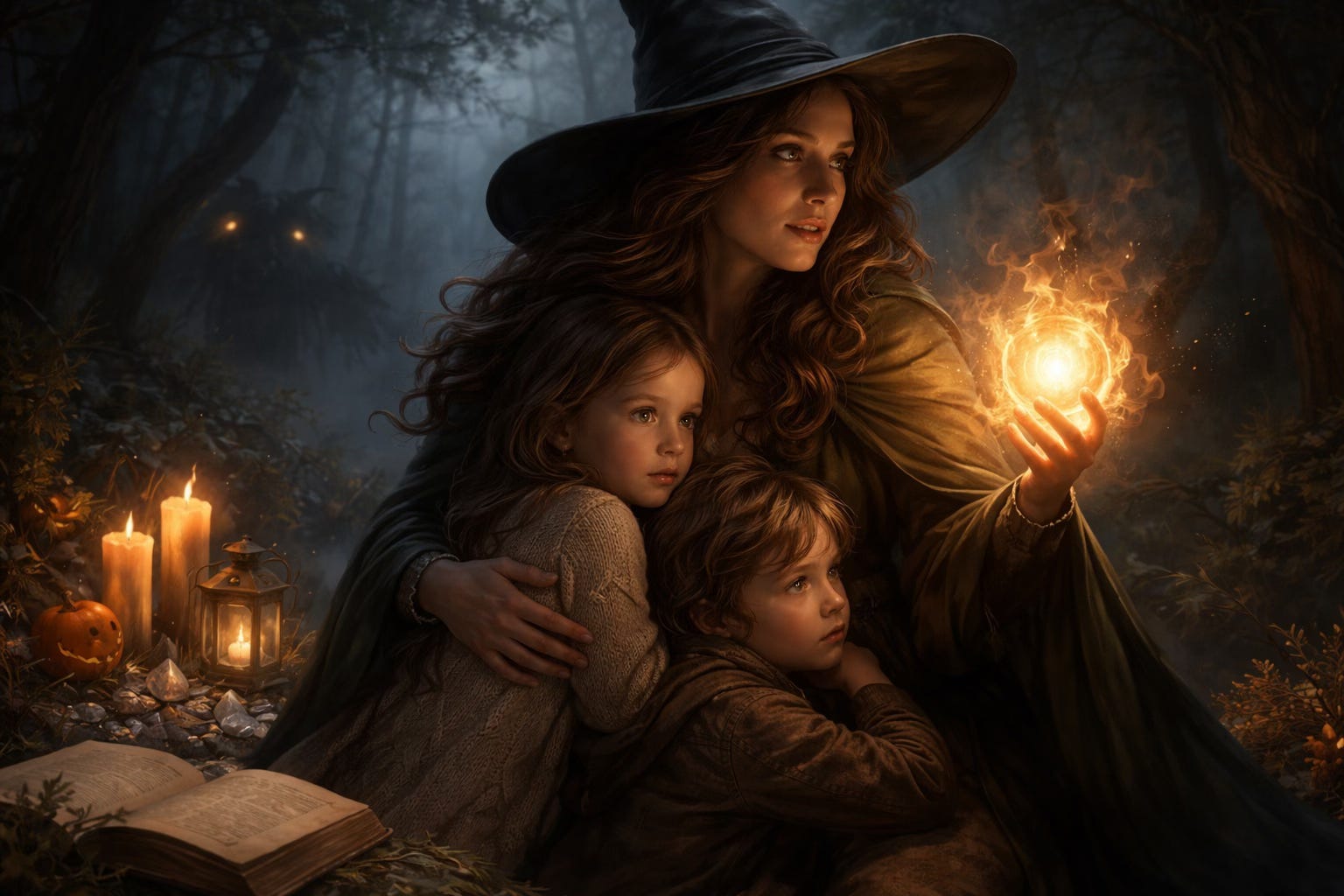
Power doesn’t cancel motherhood. One of my favorite tensions in this witch thriller is that the heroine could flatten the room, but she doesn’t. Not because she’s weak, but because she’s responsible. Maggie, being the guardian of Magic itself, creates a crushing dilemma: protect the world or protect her kids. Maggie Towne isn’t a woman enjoying a quiet empty nest or a carefree second act. She’s a woman in the trenches, balancing the staggering weight of a magical destiny with the everyday chaos of raising a family that’s already broken and fighting to heal.
Family drama in paranormal thrillers works because it’s familiar. If you’re over 40, you’ve probably had at least one moment where you thought you couldn’t keep everyone safe. That’s the heart of it. Maggie can’t keep everyone safe on her own, but the entire family system can. That’s why a book like Magica hits, because nothing’s more powerful than magic. Except family.
Now, I want to hear from you! Let’s get a conversation going over in our Substack Chat. Head over to Chat

and cast your vote on this week’s poll:
If you had access to the Towne Family Grimoire for one day, which spell would you use first?
A) The Aegis of the Threshold (To ward the house and keep out the drama... or the neighbors.)
B) Retrieval of the Obscured (To finally find the good scissors, the remote, or the left shoe.)
C) The Unmasking of Deceit (Kids lie; it’s a survival mechanism.)
D) A Poultice for Deep Wounds (Warning: not a substitute for Neosporin.)
Drop your letter (A, B, C, or D) in the Chat and tell me why! I’ll be hanging out in the comments to see what you all choose. And let’s chat about the new article.
Stay magical (and keep your wards up),
E.S. Magill